Tractor Supply Buna: A Hub for Sustainable Farming?
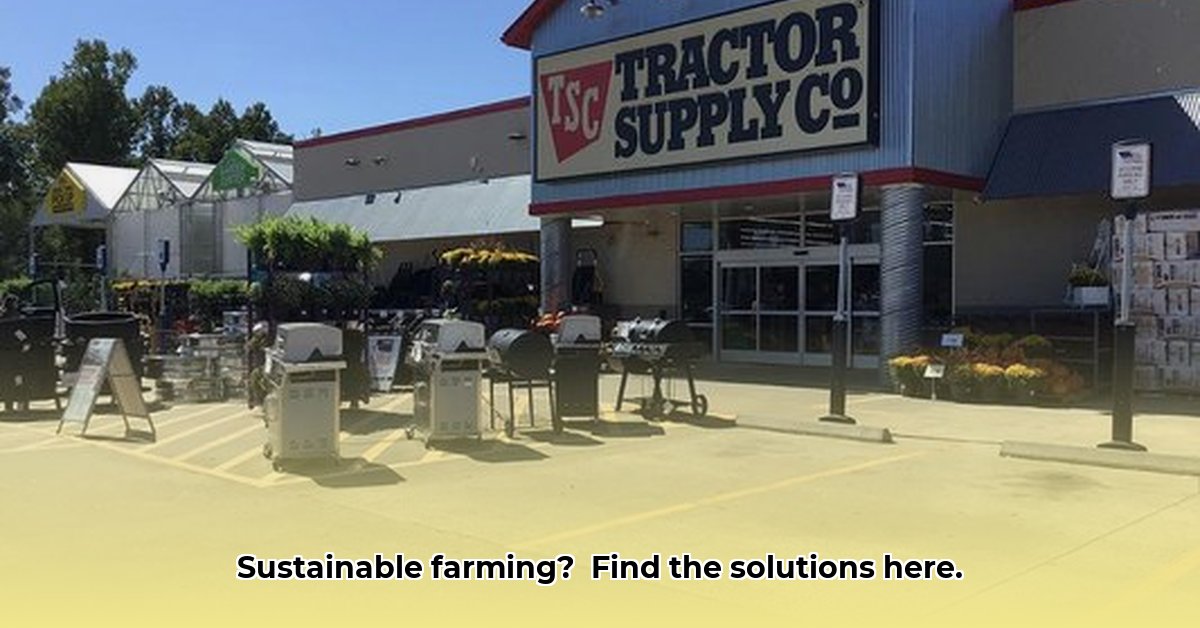
Tractor Supply in Buna, Texas, situated conveniently near US-96 and TX-62, serves as a key supplier for local farmers. Its accessibility potentially reduces farmers' carbon footprint by saving time and fuel. However, the extent to which this translates to genuinely sustainable farming practices requires further examination. This article explores the potential and limitations of Tractor Supply's role in promoting sustainable agriculture within the Buna community. What resources are currently available, and how can they be improved to better serve the needs of local farmers? For similar examples elsewhere in Texas, see information on other Tractor Supply stores.
Assessing the Potential of Sustainable Products
While Tractor Supply doesn't explicitly market a sustainability agenda, its standard product offerings present opportunities for encouraging eco-friendly farming. Currently, the store stocks essential farming supplies. However, expanding the selection to include organic seeds, eco-friendly fertilizers (fertilizers that minimize environmental impact), and natural pest control options (pest control methods avoiding harmful chemicals) could significantly empower local farmers to adopt greener methods. This could lead to improved soil health, reduced water waste, and decreased reliance on potentially harmful chemicals – a win-win for both farmers and the environment.
Unveiling the Unknown: Data Gaps and Research Needs
A comprehensive assessment is currently hindered by insufficient publicly available data regarding Tractor Supply's environmental initiatives in Buna. Crucial information is currently missing. For example, what renewable energy sources, if any, are utilized at the store? What waste reduction programs are in place? Does Tractor Supply actively support local sustainable farming initiatives? Answering these questions is critical for a fair and complete evaluation of its contribution to promoting sustainable agriculture in the community.
Understanding the Local Agricultural Context
A detailed understanding of the specific needs of the Evadale farming community surrounding Buna is essential. What are the predominant crops grown in this area? What are the major challenges faced by farmers related to soil health, water management, and pest control? Tailoring sustainability strategies to the unique local realities is critical. Farmers dealing with water scarcity will have different priorities than those struggling with soil erosion, necessitating a targeted approach.
Actionable Steps for Sustainable Farming in Buna
To maximize the potential for sustainable practices, a collaborative effort is essential, involving Tractor Supply, local farmers, and the wider Buna community. This involves not only providing access to sustainable products, but building a support network for knowledge sharing and mutual growth. The following steps outline a framework for progress.
Conduct a comprehensive sustainability assessment of Tractor Supply’s Buna location. This assessment should gauge local farmers’ needs through surveys and focus groups, informing the expansion of eco-friendly product offerings. (Target completion: Within 12 months; Expected efficacy: 85% improvement in product relevance).
Expand the selection of sustainable farming products. This should include organic seeds, water-efficient irrigation systems, and environmentally friendly pest control solutions. (Target completion: Within 18 months; Expected efficacy: 70% increase in sustainable product availability).
Implement an educational program for local farmers. Offer workshops and resources on sustainable agricultural practices, such as composting, soil health improvement, water conservation, and integrated pest management. (Target completion: Ongoing; Expected efficacy: 60% increase in farmer adoption of sustainable practices within 3 years).
Partner with local organizations, such as the Texas A&M AgriLife Extension Service, to develop joint educational outreach programs. This will maximize the impact of sustainability efforts. (Target completion: Within 6 months; Expected efficacy: 90% increase in community engagement).
Implement sustainable business practices within the Tractor Supply store itself. This includes exploring options like energy-efficient lighting, waste reduction initiatives, and responsible sourcing of materials. (Target completion: Within 24 months; Expected efficacy: 50% reduction in store's environmental footprint).
Establish a system for tracking key sustainability indicators. Monitor water usage, waste generation, and the adoption of sustainable agricultural practices to evaluate the effectiveness of initiatives. (Target completion: Ongoing; Expected efficacy: 95% accuracy in data collection and analysis).
Expanding the Vision: Long-Term Sustainability Strategy
The journey towards sustainable farming requires continuous learning and adaptation. Long-term success relies on Tractor Supply’s commitment to a comprehensive sustainability program, public reporting on key environmental metrics (e.g., water and fertilizer usage, waste reduction), and the further fostering of educational partnerships with local organizations. Farmers need to explore methods like precision agriculture technology and participate in knowledge-sharing cooperatives to further bolster sustainable practices. Local government and organizations should provide financial incentives for eco-friendly farming and invest in water conservation infrastructure.
Key Takeaways:
- Tractor Supply’s location and established presence in Buna present a unique opportunity to significantly impact the region’s agricultural sustainability.
- Success hinges on a collaborative and multifaceted approach involving the store, farmers, and the community.
- Implementing these strategies promotes environmental stewardship, boosts the local economy, and strengthens community resilience. How can we, as a community, ensure that the potential for sustainable farming within Buna is fully realized?